What Is Brand Reputation?

What brand reputation means, how it differs from brand image and identity, what it is built from, and how to manage and measure it.
Brand reputation is what people believe about your business when you're not in the room. Not what you say about yourself, not your logo or your tone of voice — the accumulated judgement that other people have formed and now repeat to each other.
The practical version of that definition matters more than the abstract one: for most businesses today, brand reputation is largely whatever appears on the first screen when someone searches your name.
Reputation, image and identity
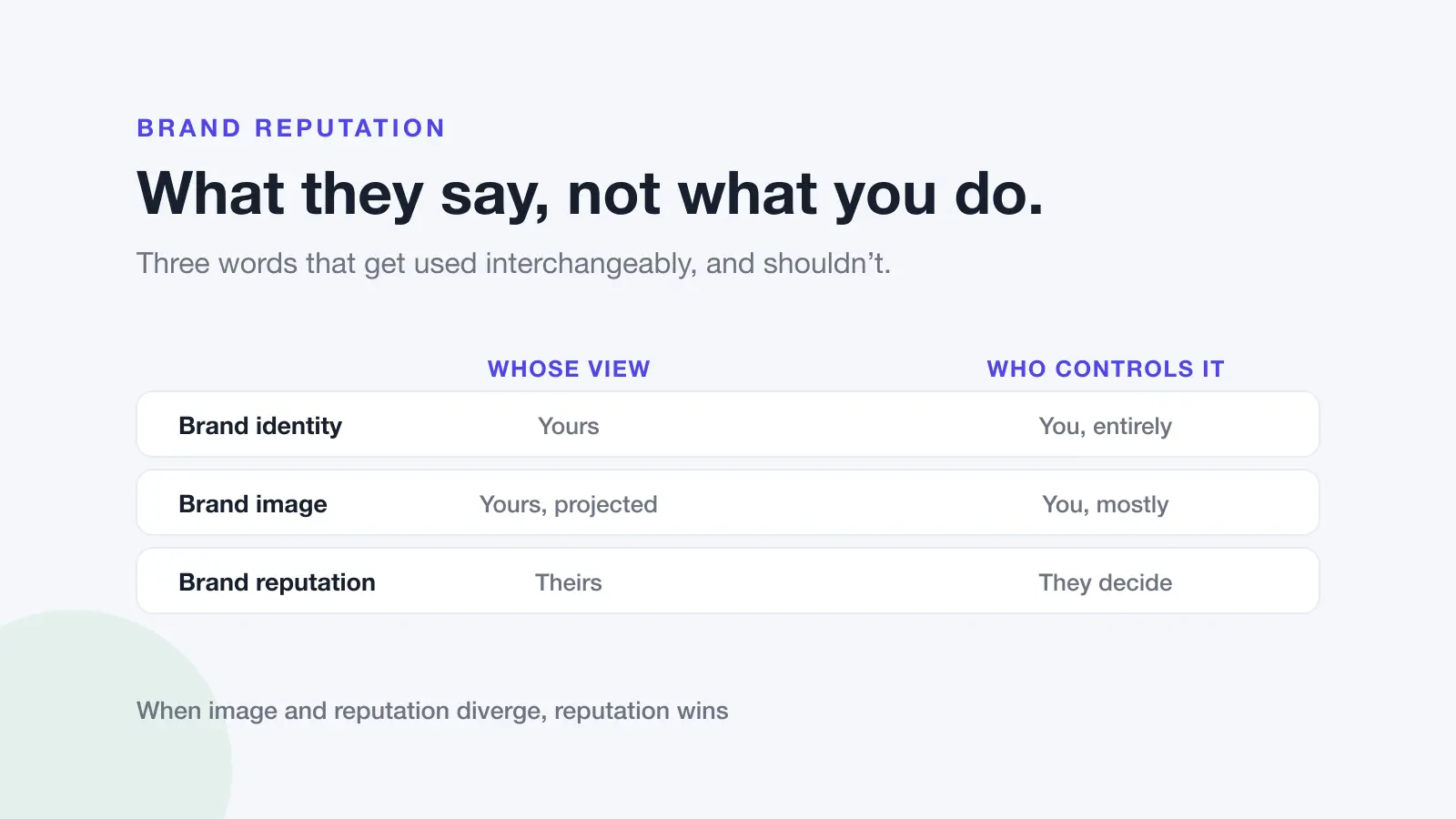
Three terms get used interchangeably and shouldn't be.
| Term | Whose view | Who controls it | Example |
|---|---|---|---|
| Brand identity | Yours | You, entirely | Your name, logo, tone, positioning |
| Brand image | Yours, projected outward | You, mostly | The advertising, the website, the promise |
| Brand reputation | Theirs | You influence, they decide | The 3.8 rating and what the reviews say |
You can change your identity in an afternoon and your image in a quarter. Reputation moves only when enough people's actual experience changes — which is why it's the slowest of the three to build and the fastest to lose.
Google review reply templates
20 replies you can copy and edit, from a 5-star thank-you to a fair answer to a 1-star complaint. Free, by email.
We'll email the templates from support@dinopix.com.au, then about one email a month with new review guides and Dinopix product news. Unsubscribe in one click from any email. Privacy policy
What it's built from
- Reviews and ratings. The most visible component, and for local businesses the dominant one — it's attached to your name in search results whether you engage with it or not.
- Word of mouth. Still the most persuasive, still the least measurable.
- Search results for your name. Everything on that first page is part of your reputation, including things you didn't publish.
- How you behave when things go wrong. Complaint handling is disproportionately weighted, because it's the part people can't fake.
- Consistency. A business that delivers the same experience every time is easier to recommend than a better one that's unpredictable.
- Employee experience. How staff talk about working somewhere reaches customers, and it shapes the service they receive.
Why it has commercial value
Reputation reduces the risk a prospective customer feels they're taking, and that shows up in concrete ways: they choose you over an unknown alternative, they question the price less, they're more forgiving of a single mistake, and good people are more willing to work for you.
It also compounds in both directions. A strong reputation attracts customers who are easier to serve, who then leave better reviews. A weak one attracts price-driven customers who are harder to please, and the reviews get worse. That feedback loop is why reputation problems rarely stay stable — they tend to improve or decay rather than sit still.
How to manage it
Know your baseline. Search your business name the way a customer would and look at what actually appears. That first screen is your reputation to most people.
Fix the recurring complaints. Group your reviews and complaints by cause, count them, and fix the largest. This is the only intervention that changes reputation at source.
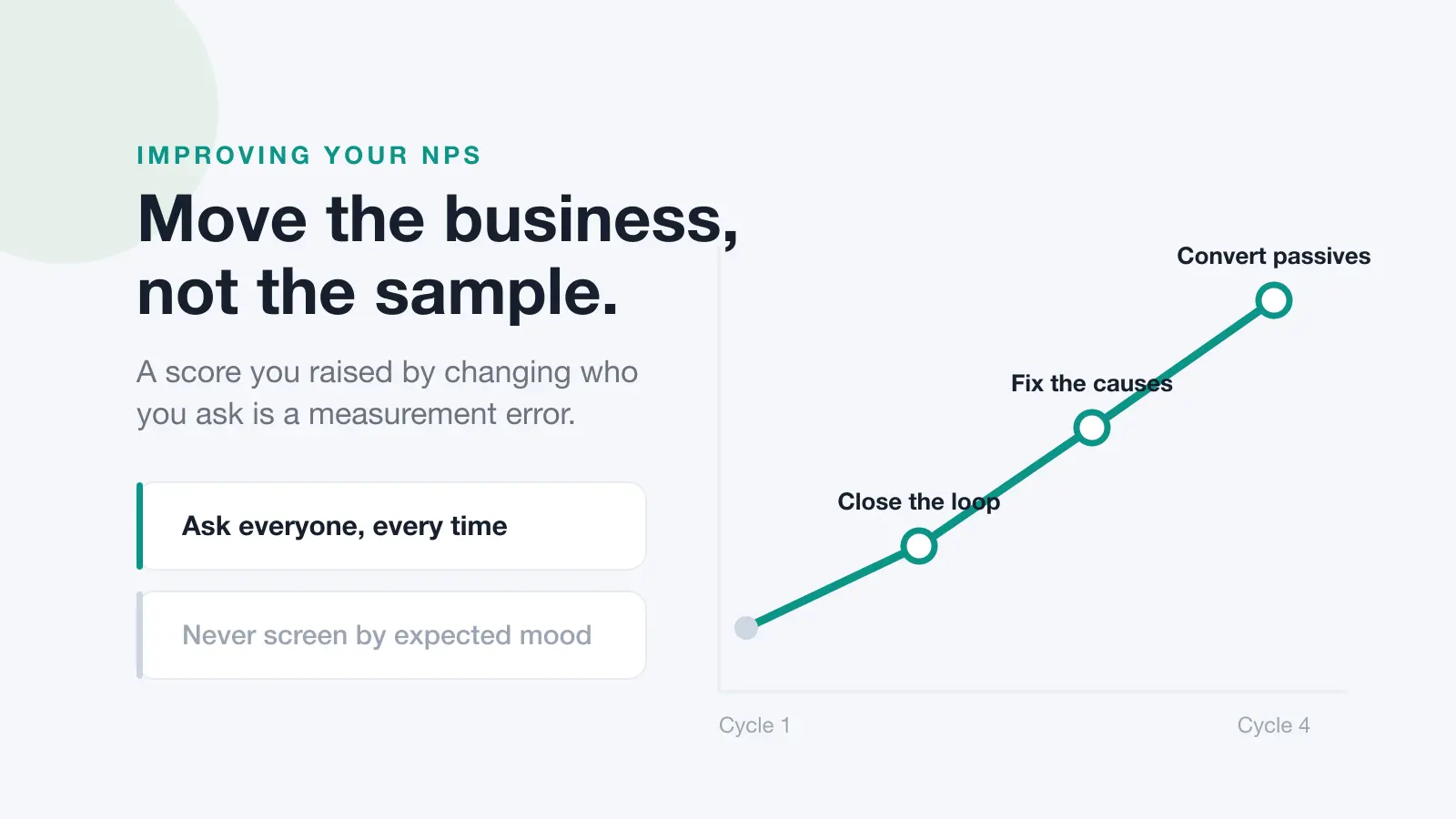
Ask everyone for reviews. Most businesses have a reputation built on a small, self-selected sample — the delighted and the furious. Asking every customer makes the public picture match reality. Never filter by expected sentiment; that's review gating and it breaches Google's policies.
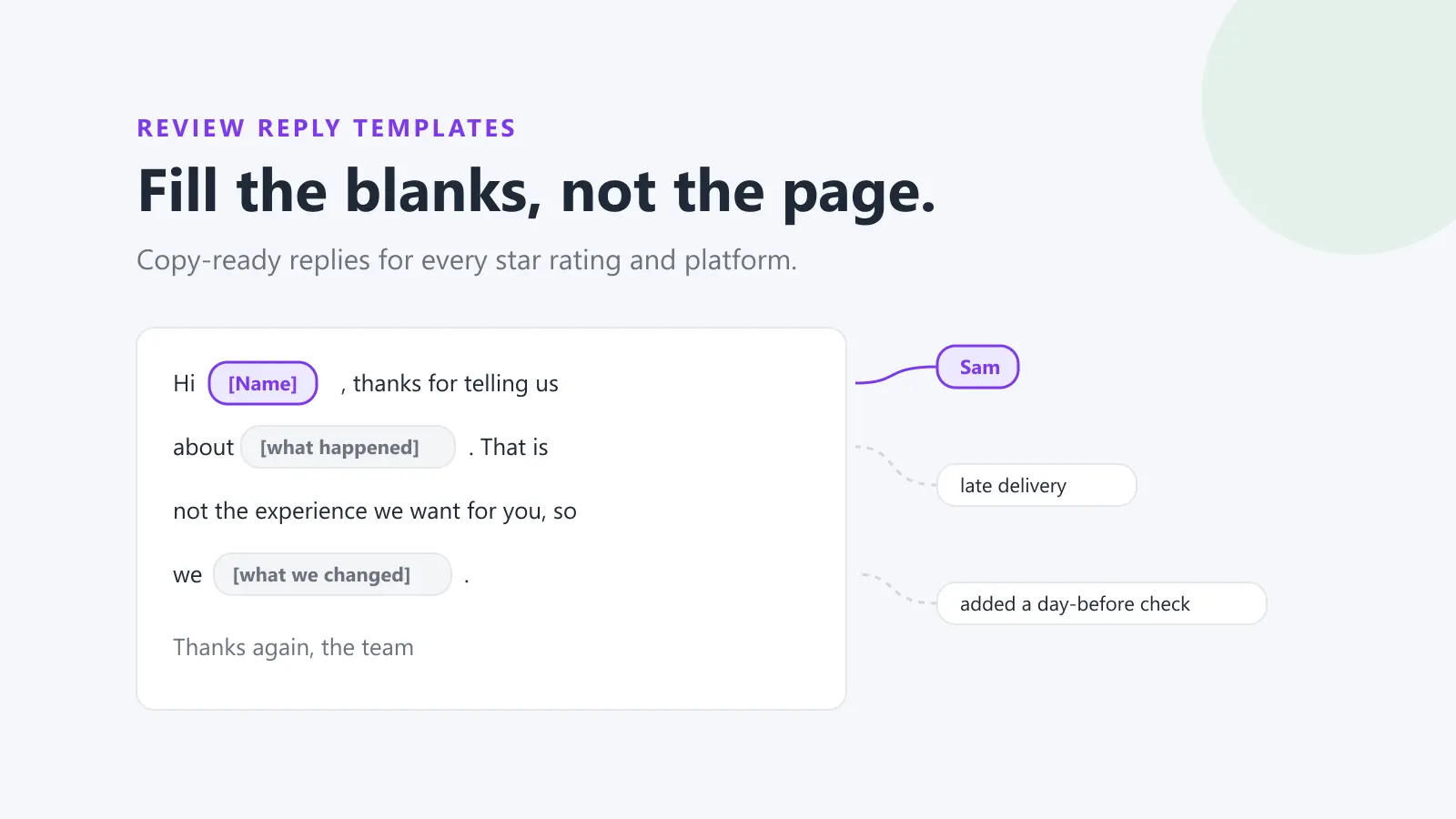
Reply consistently. Prospects read replies as evidence of how you'd treat them.
Watch it continuously. Reputation damage is cheap to fix early and expensive late.
The monitoring and asking parts are what Dinopix Reviews automates — every Google and Facebook review in one inbox with sentiment analysed so themes surface on their own, and review requests sent after each job so your public reputation reflects your whole customer base rather than the loudest slice of it.
Frequently Asked Questions
What is brand reputation?
Brand reputation is the collective belief that customers, staff and the wider public hold about your business, formed from their own experience and from what they hear and read. It differs from brand image, which is what you project. For most businesses the practical expression of it is what appears when someone searches your name — chiefly your reviews and star rating.
What's the difference between brand reputation and brand image?
Brand image is yours to control — the advertising, the website, the promise you make. Brand reputation belongs to your audience and is formed by their actual experience. When the two conflict, reputation wins, because customers trust what other customers report over what a business says about itself.
How do you measure brand reputation?
Combine your average rating and review volume across the platforms customers actually use, the themes appearing in review text over time, what ranks on the first page of search results for your name, and behavioural measures such as repeat and referral rates. No single number captures it, and any measure based only on people who chose to respond is incomplete.
How long does it take to repair a damaged reputation?
Longer than damaging it, and the timeline depends on volume. If you have 40 reviews, a run of bad ones dominates for months; at 400, the same run is absorbed quickly. Repair means fixing the underlying cause and then generating enough genuine new reviews to shift the picture — which is why building volume before you need it is the real protection.
Who should own brand reputation in a business?
Someone with authority over operations, not only over communications. Reputation is largely the visible output of how the business runs, so an owner who can only write replies is limited to managing symptoms. In smaller businesses this is the owner; in larger ones it works best as a shared responsibility with a single named coordinator.
Can you delete negative content about your business?
Rarely. Reviews can be removed only by the platform, and only when they breach its content policies. Other content generally stays unless it's unlawful. The realistic strategy is to build enough genuine positive material that the negative is outweighed rather than pursuing removal, which usually fails and sometimes draws more attention.
Sources
This guide draws on the primary sources below. Regulations and policies change — always check the current version.
Google review reply templates
20 replies you can copy and edit, from a 5-star thank-you to a fair answer to a 1-star complaint. Free, by email.
We'll email the templates from support@dinopix.com.au, then about one email a month with new review guides and Dinopix product news. Unsubscribe in one click from any email. Privacy policy